You finish a long run and your legs feel like concrete. Your hip flexors are tight. Your calves are screaming. You know you should do something about it, but the idea of driving to a massage therapist or shelling out for a fancy recovery studio just feels like too much.
Here’s the thing: recovery doesn’t have to be expensive or complicated. You don’t need a spare room converted into a personal gym. You don’t need those intimidating compression boots that cost as much as a used car. Most runners can build a genuinely useful recovery setup with less than a hundred dollars and a corner of their bedroom.
The secret is knowing which tools actually make a difference and which ones just look impressive on Instagram. A foam roller that gets used beats a thousand-dollar massage chair gathering dust. A stretch routine you can do in your living room works better than a gym membership you never visit.
This isn’t about perfection. It’s about making recovery so easy and accessible that you actually do it. Whether you’re renting a studio apartment or sharing a house with three roommates, you can create a space that helps your body bounce back faster. You just need to think small, think smart, and focus on what actually works.
Let’s talk about how to make that happen, even if you’re working with limited space, a tight budget, or both.
Choose a recovery spot that you’ll actually use
You don’t need a dedicated room or even a permanent setup. What you need is a spot where you can lie down comfortably and actually want to spend ten minutes after a run. That’s it.
The best recovery spot is usually wherever you naturally end up after coming home. Maybe that’s near your front door, beside your couch, or in a quiet corner of your bedroom. The key is making it easy to use without rearranging furniture or moving a bunch of stuff around first.
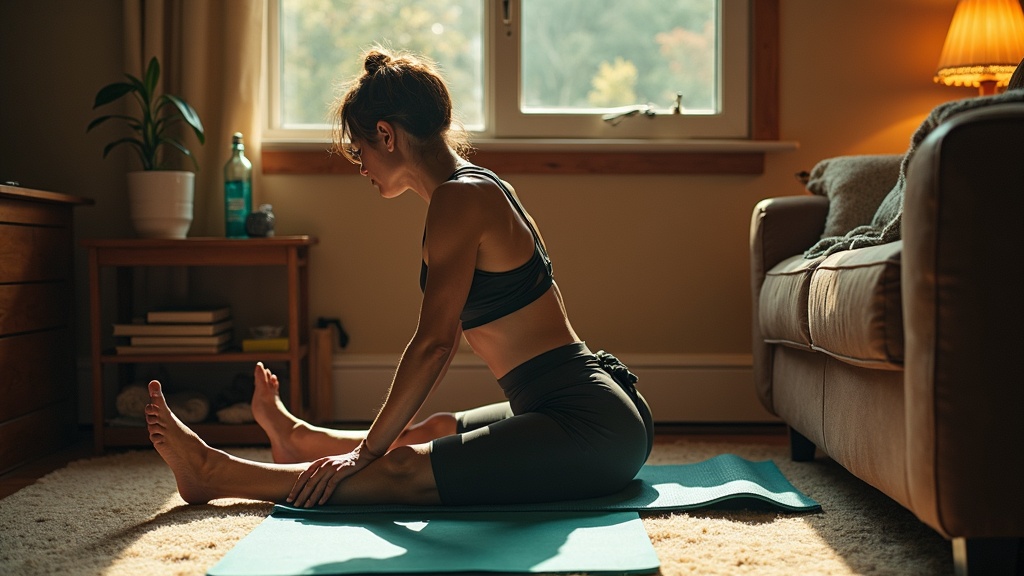
You’ll need enough floor space to stretch out fully. Think about the length of your body plus maybe an extra foot. If you can roll out a yoga mat without blocking a doorway or tripping over the coffee table, you’ve found your spot.
Decent lighting matters more than you’d think. You want to see what you’re doing without straining your eyes or feeling like you’re in a cave. Natural light is great, but a regular lamp works fine too.
For renters and small apartments, the trick is keeping everything portable. A yoga mat that rolls up and leans in a closet works perfectly. Store your foam roller, lacrosse ball, and resistance bands in a small basket or bin that slides under your bed or couch. Some people use a decorative storage ottoman that doubles as seating.
The whole setup should take less than thirty seconds to prepare. If it’s complicated or requires moving furniture every time, you’ll skip it when you’re tired. And let’s be honest, you’re always tired after a run.
Match the space to what your body needs most after running
Before you buy anything, spend a week paying attention to how you feel after different runs. Your body will tell you what it needs most.
If your calves scream after speed work or your feet throb after a long run, you’re dealing with soreness in specific spots. That means you want tools that target those areas directly. Think foam rollers, massage balls, or even a frozen water bottle you can roll under your foot while watching TV.
Maybe it’s not sharp soreness but a feeling of being locked up. Your hips feel tight after hill repeats, or your hamstrings won’t quite stretch out. That’s stiffness, and it responds better to gentle movement and stretching. A yoga mat costs almost nothing and gives you a dedicated spot to move through some basic stretches.
Some runners notice their legs feel heavy and puffy after harder efforts. That’s fluid pooling in your lower legs, and it helps to get them elevated. A couple of pillows or a cushion against the wall works perfectly. You don’t need special equipment.
Then there’s the mental side. If you’re wound up after evening runs and struggle to wind down for sleep, your recovery space might just need to be calm and quiet. A spot where you can sit or lie down for ten minutes without your phone makes a real difference.
Pick the one or two things that bug you most often. That’s where you start. You can always add more later, but beginning with your actual needs keeps you from filling your apartment with gear that just collects dust.
Start with a small set of affordable recovery tools that do a lot
You don’t need a garage full of equipment to recover well at home. A handful of simple tools will cover most of what your legs and body need after a run. The trick is choosing things that do multiple jobs and don’t take up much space.
Start with something soft to lie or sit on while you stretch. A yoga mat is ideal, but a large bath towel works fine if you’re renting or don’t want to buy one yet. You just need enough padding so floor work doesn’t feel miserable on your tailbone or knees.
Next, grab a foam roller or something similar. Foam rollers help you work through tight spots in your calves, quads, and IT bands by letting you use your body weight to apply pressure. If you’re buying one, look for something around 12 to 18 inches long and medium firmness. Too soft won’t do much. Too hard can feel brutal if you’re new to rolling. A rolling pin wrapped in a towel can work in a pinch, though it’s not as comfortable.
Add a small massage ball to the mix. A lacrosse ball or tennis ball gets into smaller areas like your feet, glutes, or shoulders where a roller can’t reach. Lacrosse balls are firmer and tend to last longer, but a tennis ball from the dollar store does the job just fine.
Finally, keep a stretch strap or long towel handy. This helps you ease into hamstring or calf stretches without forcing anything. Look for something at least five feet long. An old belt or resistance band works too. The goal is just something to hold onto that gives you a bit of leverage.
Use DIY and household items to build a runner recovery zone
You don’t need fancy equipment to take care of your legs after a run. Most of what you need is probably already sitting in your home.
A rolled-up bath towel works surprisingly well as a gentle foam roller. Roll it tightly, secure it with a rubber band or two, and you’ve got something firm enough to work out tension in your calves or hamstrings. It won’t be as dense as the store-bought version, but that’s actually fine for beginners or anyone with sensitive muscles.
For smaller, targeted pressure, grab a water bottle from the fridge or a can of soup from the pantry. You can roll these under your foot to ease plantar fasciitis or along your thigh while sitting. The cold water bottle does double duty by reducing inflammation while you roll.
A sturdy chair becomes your stretching partner. Use the seat to prop your heel for a hamstring stretch, or hold the back while you drop into a calf stretch with one leg behind you. Just make sure the chair won’t slide on your floor.
A firm pillow can prop up your legs while you rest, helping fluid drain away from tired ankles. And a bare wall is perfect for ankle mobility work. Stand facing it, place your toes at the base, and gently lean your knee forward to stretch your calf and ankle.
Keep everything together in a small bucket, storage bin, or even a reusable shopping bag. That way your recovery zone travels with you from room to room.
One safety note: the pressure should feel like relief, not sharp pain. If something hurts in a bad way, ease off immediately.
Add one or two upgrades if they solve a specific problem for you
Once you’ve got your basics sorted, you might notice a specific recovery need that keeps coming up. That’s when an upgrade makes sense. But think about it like buying a kitchen gadget. If you’ll actually use it multiple times a week, great. If it’ll sit in a closet gathering dust, skip it.
A massage gun can be a game changer if you really dislike foam rolling or need something that feels more targeted on tight spots. They’re noisy and take up about as much space as a large water bottle, so consider whether you’ve got a place to keep it handy. If it’s buried in a drawer, you won’t reach for it.
Compression sleeves are worth considering if you spend long days on your feet at work or have a big travel day coming up. They’re small and packable, which makes them easy to store even in tight spaces. Some runners swear by them for recovery between hard training blocks.
Heat and cold tools don’t need to be fancy. A microwavable pad works well if heat helps you relax tight muscles before bed. A basic ice pack from the drugstore does the job after a tough run when something feels tender. Both fit in most freezers and drawers without drama.
A small mobility wedge or slant board can help if you’re dealing with cranky ankles or tight calves. These are flat enough to slide under a couch or bed. They’re particularly useful if you’ve noticed certain stretches feel awkward without a little lift under your heels.
The key is choosing one or two things that address what actually bothers you, not building a whole physical therapy clinic at home. And remember, none of this replaces seeing a professional if something genuinely hurts or won’t improve.
Make it work in small spaces and rentals without clutter
The biggest reason runners skip recovery at home isn’t laziness. It’s that pulling out a foam roller feels like a whole project when you’re already tired. The fix is simple: keep everything in one place and make it easy to grab.
A small plastic bin or canvas tote works perfectly. Toss in your massage ball, resistance band, and whatever else you use. Slide it under your bed, next to the couch, or in a closet. When you’re ready to use something, it’s all right there. No digging through three different rooms.
For things like resistance bands or straps, an over-the-door hook costs a couple dollars and needs zero drilling. Hang them on your bedroom or bathroom door. A yoga mat that rolls and has attached straps stays compact and can lean in a corner or slide between furniture.
Put your recovery stuff near where you already relax. If you always crash on the couch after a run, keep your bin nearby. If you stretch before bed, stash it next to your nightstand. You’ll actually use it if it’s already where you are.
If you share walls with neighbors, think quiet. Skip anything that thumps or vibrates loudly. A folded towel or your yoga mat under you while you roll dampens noise and protects floors. Most landlords care more about damage and noise complaints than they do about you foam rolling in your living room.
Keep it visually low-key if clutter stresses you out. Neutral bins blend in. A single rolled mat in the corner doesn’t scream “gym explosion.” The goal is to make recovery feel like part of your space, not like you’re storing equipment for a fitness influencer.
Create a short, repeatable recovery flow you can do after most runs
The best recovery space is one you actually use. That means keeping things simple enough that you don’t need to think too hard when you’re tired and sweaty.
Try this basic flow after your next few runs and see how it feels. Start with one or two minutes of easy breathing, sitting or lying down in your space. Not meditation or box breathing or anything formal. Just slow things down and let your heart rate drop naturally. This helps your body switch out of effort mode.
Then spend four to six minutes with a foam roller or lacrosse ball on whatever feels tight that day. Maybe it’s your calves. Maybe it’s your hip flexors or the outside of your thigh. You don’t need to hit every muscle group or follow a diagram. Just find the spots that feel crunchy or tender and work them gently until they soften a bit.
Finish with two or three minutes of gentle movement. Roll your ankles in circles. Rock your hips side to side. Twist your upper back while sitting. The goal isn’t to stretch hard or increase your range of motion right now. You’re just reminding those joints that they can move freely.
The whole thing takes about ten minutes. Some days you’ll do less. Some days you might linger on one tight spot a little longer. That’s fine. The point is to make it small enough that it doesn’t feel like another workout, and consistent enough that it becomes automatic. You’re not trying to fix everything at once. You’re just taking care of what needs attention today.