If you’re a runner dealing with tight calves, sore quads, or that nagging knot in your hip, you’ve probably heard about foam rollers and massage guns. Both promise to help your muscles recover faster and feel better. But they work in pretty different ways.
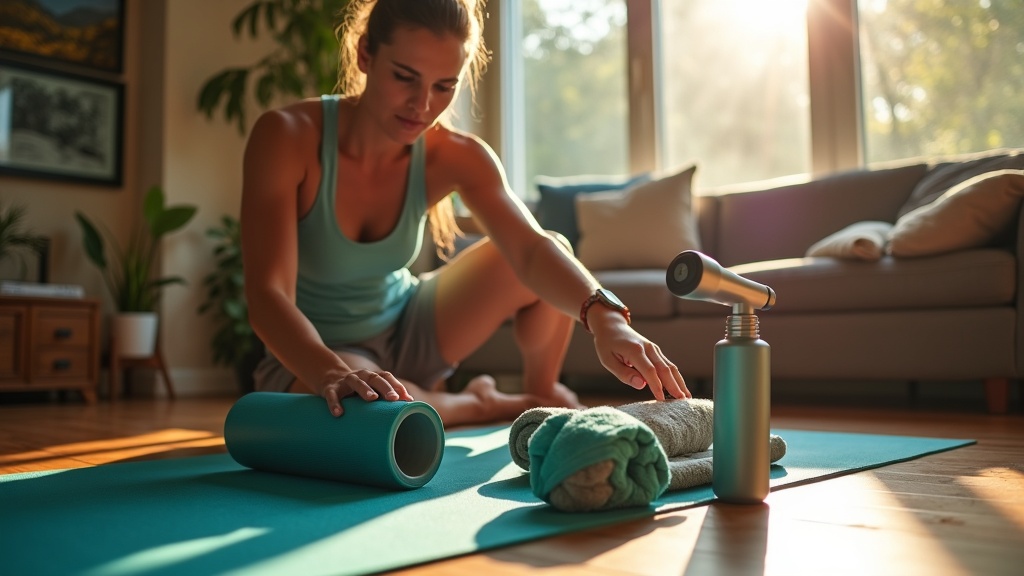
A foam roller is basically a firm cylinder you roll your body over, using your own weight to apply pressure. It’s simple, quiet, and has been around forever. A massage gun, on the other hand, is a handheld power tool that delivers rapid pulses deep into your muscles. It’s newer, buzzier, and feels more high-tech.
The thing is, neither one is automatically better. It depends on what kind of tightness you’re dealing with, how much control you want, and what fits your budget. Some runners swear by one and ignore the other. Others keep both in their recovery toolkit.
Maybe you’ve got general muscle soreness after a long run and need something to loosen up your legs. Or maybe there’s a specific tight spot that won’t quit no matter how much you stretch. The right tool can make a real difference, but only if it matches the problem you’re trying to solve.
This guide will help you figure out which tool makes the most sense for your body, your routine, and your wallet. No hype, no sales pitch. Just a clear look at what each one actually does and when it works best.
What a foam roller and a massage gun actually do
A foam roller is basically a firm cylinder that you position under different parts of your body and roll back and forth. You’re using your own bodyweight to create pressure across a fairly wide area. Think of it like a rolling pin, but you’re the dough. The pressure spreads out, so you feel a deep, broad push into the muscle.
A massage gun works completely differently. It delivers rapid pulses to a much smaller spot, usually through different attachments that concentrate the force. The sensation is more like rapid tapping or vibration right where you place it. You control how hard it pushes and where it goes, instead of using your bodyweight.
When people say these tools “relieve tight muscles,” they usually mean that afterward, the area feels less stiff and moves more easily. That tightness or soreness feeling decreases, at least temporarily. Your leg might feel looser when you walk or stretch. It’s not fixing an injury, it’s just making things feel better for a while.
Both tools can create what runners call “good pain.” It’s uncomfortable, sometimes intensely so, but in a way that feels productive. You can tell it’s working. Bad pain feels sharp, shooting, or like something is wrong. If you wince and tense up completely, you’ve gone too far.
The key difference in how they feel: foam rolling tends to be a slower, grinding sensation that you have to work through with your whole body. Massage guns feel more aggressive and focused, but you’re not supporting your weight, so you can adjust the intensity instantly by pulling it away or changing the speed.
Which tool fits tightness, soreness, or warming up before a run
After a hard run, when everything feels generally achy and tired, a foam roller usually does the job. Rolling out your quads, hamstrings, and calves after intervals or a long Sunday run helps flush out that heavy, fatigued feeling without much fuss. You can do it on the floor while watching TV, and it covers a lot of ground quickly.
But when you have a specific tight spot that won’t quit, a massage gun tends to work better. Think about that stubborn knot in your calf that showed up after hill repeats, or the deep tightness in your glutes that sits there no matter how much you stretch. The massage gun lets you dig into exactly that spot without having to position your whole body weight on it. It’s especially helpful for places like your hip flexors, where it’s awkward to get enough pressure with a roller.
Before a run, the choice depends on what you need. If you’ve been sitting at a desk all day and your hips feel stiff, a few minutes with a massage gun can wake things up without wearing you out. It’s quick and doesn’t require getting down on the floor. A foam roller works too, but it takes a bit more effort and time. Some runners like rolling before easy runs when they have more time to ease into it.
Neither tool is magic, and neither one will save you from every injury. But matching the tool to what your legs actually need makes recovery feel less like a chore and more like something that actually helps.
How each tool works on common runner trouble spots
Let’s talk about the places runners actually feel tight and sore, and which tool makes more sense for each spot.
Your calves, quads, and hamstrings are foam roller territory. These are big, meaty muscles that sit flat against the ground when you roll over them. You can use your body weight to control the pressure, and the broad surface of the roller covers a lot of ground quickly. A massage gun works here too, but you’ll be holding it in place longer to cover the same area.
Glutes are a toss-up. A foam roller works great if you don’t mind the slightly awkward positioning of sitting on it. A massage gun lets you stay standing or lying face-down, which some people find more comfortable. Both get the job done.
Hip flexors are tricky with a foam roller because they’re on the front of your body and don’t press flat against the floor easily. You end up in a plank-like position that can feel unstable. A massage gun reaches them without any gymnastics required.
The IT band area on the outer thigh can feel intense with either tool. A foam roller puts more of your body weight on it, which might be too much at first. A massage gun gives you better control over pressure, but remember you’re still working a sensitive spot either way.
For your feet, a foam roller works better than you’d expect. Just roll a smaller one or even a tennis ball under your arch while sitting. Most massage guns are too bulky and powerful for the bottom of your foot, though some come with a softer attachment specifically for this.
Comfort and safety: how to avoid making soreness worse
Here’s the most common mistake runners make with recovery tools: thinking that more pain means better results. It doesn’t. If you’re wincing, holding your breath, or feeling sharp stabbing sensations, you’re pushing too hard.
Your body gives clear signals when something’s wrong. Sharp pain is an obvious one, but also watch for numbness, tingling, or a burning sensation that doesn’t fade quickly. If you notice bruising after using either tool, or if the area feels worse the next day instead of better, you’ve overdone it.
The goal is to create gentle pressure that feels uncomfortable but manageable. Think of it like stretching: you want to feel tension, not pain. With a foam roller, you control intensity with your body weight. Reduce pressure by supporting more weight with your hands or other leg. With a massage gun, start on the lowest setting and only increase if it feels comfortable.
Time matters too. You don’t need to spend five minutes grinding away at one spot. Thirty seconds is often plenty. Move around the general area rather than drilling into one tender point. Your muscles respond better to patient, distributed pressure than aggressive targeting.
Some situations call for skipping the tools entirely. If you’re dealing with a fresh injury, significant swelling, or inflammation that’s hot to the touch, give it a rest. These tools work on regular muscle tightness and soreness, not acute problems. When in doubt, a day off from rolling or percussion won’t hurt your recovery. Pushing through warning signs might.
Budget and buying: what you get for the money
Foam rollers are the clear winner if budget matters. A decent foam roller costs between fifteen and forty dollars. Massage guns start around eighty dollars for basic models and can climb past three hundred for premium options.
For foam rollers, the main differences come down to density and surface texture. A basic smooth roller works fine for most runners. Firmer rollers and textured surfaces dig deeper into muscles, which some people love and others find too intense. Size matters mainly for travel—a shorter roller fits in a suitcase more easily.
With massage guns, the differences get more noticeable. Cheaper models often stall out when you press them against tight muscles, which defeats the whole purpose. They also tend to be louder and have shorter battery life. If you’re only using it a few minutes after easy runs, a basic model might be enough. But if you have chronically tight calves or plan to use it regularly, the difference between a budget gun and a mid-range one becomes obvious quickly.
Think about attachments too. Most guns come with multiple heads, but you’ll probably only use one or two. Don’t pay extra for a fancy case with twelve attachments you’ll never touch.
Durability matters for runner recovery equipment. Foam rollers last for years unless you leave them in a hot car. Massage guns have motors and batteries that eventually wear out. Check the return policy and warranty before buying, especially for guns.
For portability, foam rollers are bulky but indestructible. Massage guns are easier to pack but need charging. If you travel often for races, this might tip your decision one way or another.