
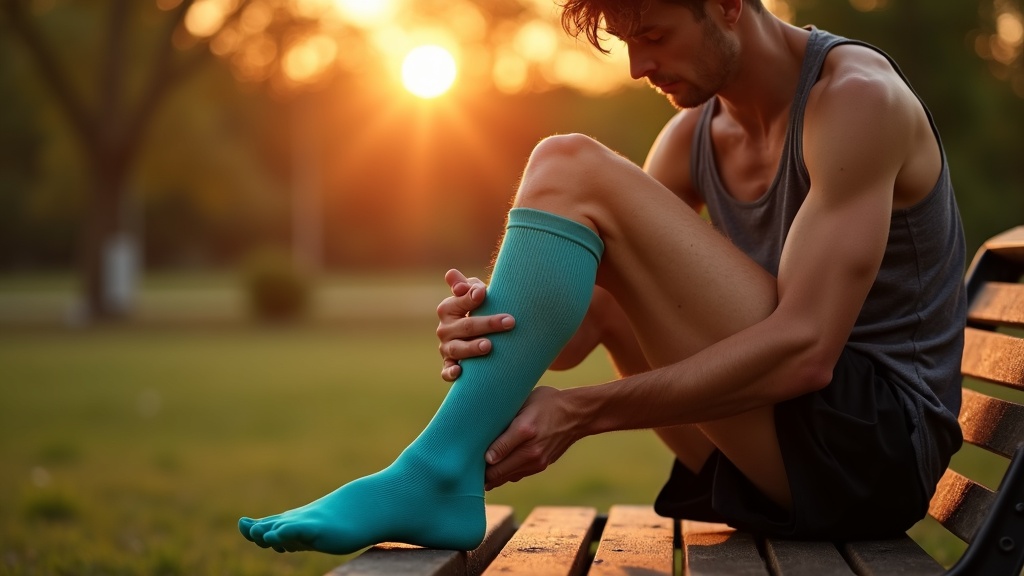
If you’ve ever pushed through a tough run or ramped up your mileage too quickly, you know the feeling. Your calves turn into concrete. Walking down stairs becomes an adventure. And someone online inevitably suggests compression sleeves as the answer.
Calf soreness usually comes from one of two places. Either you’ve asked your muscles to do more than they’re used to, or you’ve been pounding the pavement in a way that puts extra stress on them. That soreness is your body responding to tiny tears in the muscle fibers. It’s normal, but it’s also annoying when you’re trying to stay consistent with training.
Compression gear has become huge in the running world. Walk into any running store and you’ll see walls of sleeves, socks, and tights promising faster recovery and less pain. The marketing makes it sound like magic fabric that’ll have you bouncing back overnight.
Here’s the reality. Compression gear can genuinely help with some aspects of recovery. But it’s not going to erase the consequences of overtraining or replace the basics like rest and proper nutrition. The benefits are real but modest, and they work best when you understand what’s actually happening under those tight sleeves.
This matters because compression gear isn’t cheap, and runners deserve to know what they’re actually buying. Some effects you’ll notice right away. Others are subtle or only show up in specific situations. And a few of the claims floating around simply don’t hold up when you take the gear out of the lab and into everyday training.
Why calf soreness shows up so often for runners
Your calves do a lot of work when you run. Every time your foot pushes off the ground, those muscles fire hard to propel you forward. Do that a few thousand times in a single run, and it’s no wonder they feel tired afterward.
The soreness usually gets worse when something changes. Maybe you added an extra mile or two this week. Maybe you tackled a hilly route when you normally stick to flat terrain. Hills make your calves work overtime, especially on the way up. Speed work does the same thing. When you pick up the pace, your calves have to generate more force with each stride.
The way your foot lands matters too. If you run more on your forefoot or the balls of your feet, your calves absorb more of the impact. Some runners naturally do this. Others shift toward it without realizing when they get tired or switch to a lighter, more minimal shoe. Even a small change in footwear can redistribute the load and leave your calves feeling it the next day.
Most of the time, this soreness is just regular muscle fatigue. It’s the dull, achy feeling that shows up a few hours after your run or the next morning. Your muscles are adapting to the work you asked them to do. That’s normal.
But if the pain feels sharp, sudden, or like something popped or tore, that’s different. Same goes for swelling that doesn’t go away or pain that gets worse instead of better. Those are signs to take seriously and get checked out. For everything else, that familiar calf tightness is just part of running.
What compression sleeves and socks are actually doing
Compression gear wraps your lower leg in snug, elastic fabric that applies gentle pressure all around. Think of it like a firm hug that stays consistent for as long as you’re wearing it. That’s really all it is—sustained pressure, nothing fancy.
This pressure does a few things that might matter for how your calves feel after a hard run. First, it gives your muscles a sense of support, which some runners describe as feeling more stable or locked in. Second, it can help reduce the pooling of fluid that happens when you stop moving. After you finish running, blood and other fluids tend to collect in your lower legs, especially if you’re standing around or sitting for a while.
When compression gear gently squeezes the area, it encourages that fluid to keep moving instead of just sitting there. This doesn’t make your calves heal faster in some magical way, but it might mean less of that heavy, waterlogged feeling the next morning.
For some people, this translates to calves that feel less achy or tight the day after a long run. For others, the difference is barely noticeable. The effect isn’t dramatic, and it’s not universal. But if you’ve ever had that swollen, stiff sensation in your lower legs after a tough workout, compression gear is designed to take the edge off that specific problem.
The key word here is “might.” Compression isn’t a cure, and it won’t undo a workout you weren’t ready for. But it does offer a gentle, mechanical nudge that can make recovery feel a bit more comfortable for many runners.
What results you can realistically expect (and why they vary)
Most runners who use compression gear report feeling a bit better during recovery, not a dramatic overnight fix. The benefit tends to show up as legs that feel less heavy or achy the day after a hard run. Some people notice their calves feel more supported and comfortable when moving around. Others honestly don’t feel much difference at all.
Think of compression as something that might make recovery more comfortable, not something that erases soreness like flipping a switch. Your calves will still need time to repair themselves. What compression can do is take the edge off that stiff, swollen feeling while your body does the actual healing work.
Why does it help some runners more than others? A lot comes down to the details. If you just finished an especially brutal hill workout, your muscles are dealing with more damage and inflammation than after an easy run. Compression might feel more helpful when soreness is moderate, not when you’ve completely thrashed your legs.
Fit matters too. Sleeves that are too loose won’t provide enough pressure. Ones that are too tight can feel uncomfortable or restrict circulation in the wrong way. Getting the right size for your calf shape makes a real difference in whether you’ll actually want to wear them.
Personal sensitivity plays a role as well. Some people are just more aware of how their legs feel and notice subtle changes. Others need something more obvious before they’d say it’s working. Neither response is wrong. Compression is one of those tools that works well enough for many runners to keep using it, but it’s not a miracle cure that transforms everyone’s recovery.
When to wear compression gear for calf soreness
The timing of when you wear compression gear can change what you get out of it. Different moments in your day call for different approaches, and there’s no single perfect schedule that works for everyone.
Some runners like wearing compression sleeves during their actual runs. This isn’t really about recovery, but more about how it feels in the moment. The gentle squeeze can make your calves feel more supported, especially on longer runs or when you’re already dealing with soreness. Think of it like a reassuring hug for tired muscles.
Right after a hard workout is when many people reach for compression gear. Slipping on sleeves or socks for a couple of hours post-run can help with that immediate heavy-leg sensation. Your calves are warm, possibly a bit swollen, and the compression might help things settle down during the critical cooldown window.
Later in the day is another useful time, especially if you’re on your feet a lot or traveling. That afternoon slump when your legs feel thick and tired? Compression gear can take the edge off. Some people wear it for a few hours while working at a standing desk or during a long flight.
How long should you wear them? A general range is anywhere from one to four hours at a time, but comfort is your best guide. If they start feeling too tight or your skin feels irritated, take them off. Check that you’re not getting any numbness or weird tingling. Compression should feel snug but never painful or restrictive. You’re looking for gentle pressure, not a tourniquet.
Fit matters more than brand: getting the pressure and size right
The most expensive compression gear in the world won’t help if it doesn’t fit properly. This is probably the biggest reason some runners try compression and decide it doesn’t work.
Good compression should feel snug and supportive, like a firm handshake around your calf. You should feel gentle, even pressure all around the muscle. It shouldn’t hurt, tingle, or make your leg feel numb. If you’re getting deep red marks that last more than a few minutes after taking them off, they’re too tight.
On the flip side, if the sleeves slide down while you run or you barely notice you’re wearing them, they’re probably too loose to do much good. You want that Goldilocks fit where you’re aware of the compression but it’s not uncomfortable.
Getting the right size starts with measuring. Use a soft tape measure to find the widest part of your calf, usually a few inches below your knee. Then actually check the brand’s sizing chart before you buy. Different brands use different size ranges, so being a medium in one doesn’t mean medium everywhere.
You’ll also need to decide between sleeves and full socks. Sleeves just cover your calf and leave your foot free, which some runners prefer for breathability. Full compression socks go over your foot and ankle too, giving you support there as well. For calf soreness specifically, sleeves usually do the job. The choice mostly comes down to what feels better to you.
What compression gear can’t fix for sore calves
Compression sleeves can help you feel better after a hard run, but they won’t fix the underlying reasons your calves keep getting sore in the first place.
If you jumped from twenty miles a week to forty, no amount of squeezing will compensate for that shock to your system. The same goes if you’re skipping rest days, sleeping four hours a night, or running hard seven days straight without recovery. Compression can support healing, but it can’t undo overtraining.
It also won’t make up for weak calves or tight ankles. If your muscles aren’t strong enough to handle the load you’re putting on them, they’ll keep complaining no matter what you wrap them in. The gear might dull the ache temporarily, but the pattern will repeat itself.
Think of compression like ice after a tough workout. It feels good. It might help a bit with swelling and discomfort. But if you’re getting injured every other week, icing isn’t the answer. You need to look at your training plan, your sleep, your fueling, and whether your body has the strength and mobility to handle what you’re asking it to do.
If soreness keeps coming back in the same spot with the same intensity, that’s your body trying to tell you something. Compression gear can be part of your recovery toolkit, but the bigger levers are usually how much you’re running, how much you’re resting, and whether your legs are actually ready for the work.
How compression fits into a simple calf recovery routine
Picture this: you’ve just finished a tough run that left your calves feeling tight and heavy. You’re not injured, but you know tomorrow might be uncomfortable. This is where compression gear slots in naturally, alongside the other basic things your body needs to recover.
After you cool down and shower, you might pull on compression sleeves while you go about your day. They’re not doing anything magical, but that snug feeling can make your calves feel more supported as you move around. Some runners find this makes it easier to stay active later in the day instead of collapsing on the couch.
The rest of your recovery looks pretty straightforward. Drink enough water. Eat a decent meal with some protein and carbs. Maybe do some gentle stretching if your calves feel like they want it, but don’t force anything painful. The compression sleeves are just there in the background, potentially helping blood flow while you handle the basics.
The real recovery work happens when you adjust your training. If your calves are sore, they’re telling you something. Maybe tomorrow’s run should be shorter or slower. Maybe you need an extra rest day. Compression gear can’t override that message.
Think of compression as a comfort tool that might speed things up slightly and help you stay consistent. It’s the difference between calves that feel okay enough to move around versus ones that keep you shuffling stiffly all day. That’s useful, but it’s not a replacement for listening to your body or giving yourself easier days when you need them.